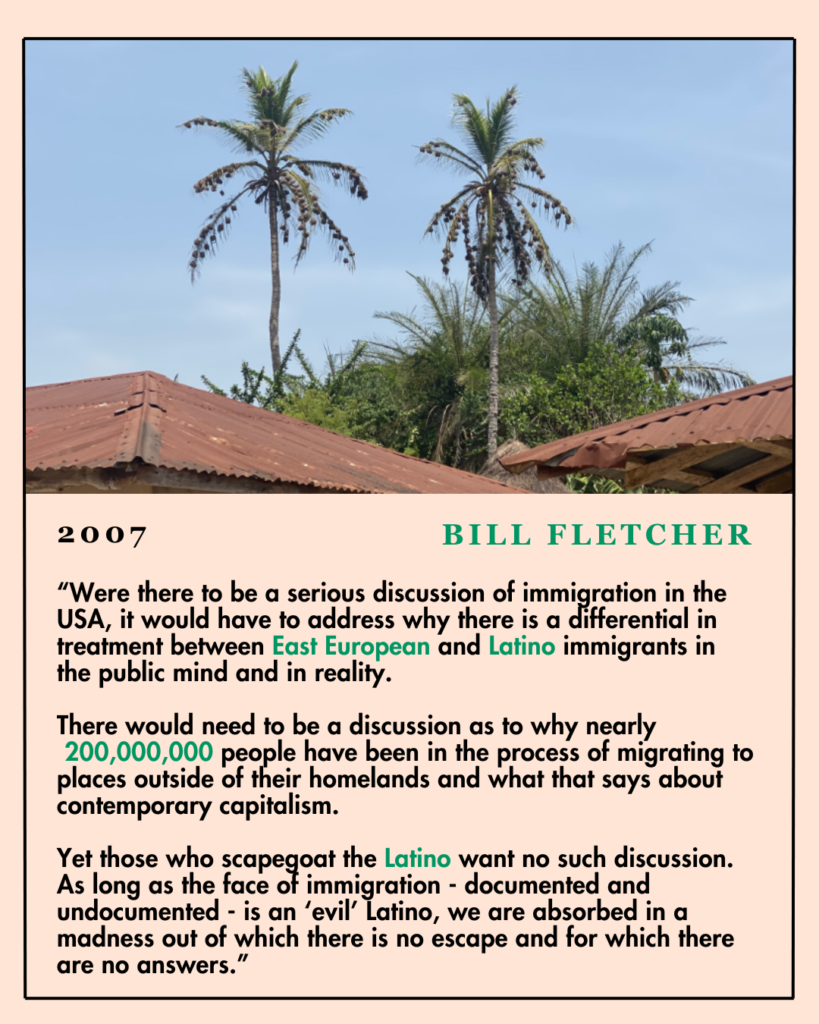
In his 2007 article, “Another Side to Race and Immigration,” Bill Fletcher Jr. reflected on how the public perception of immigration had changed since he lived in Boston during the 1980s. At that time, Irish immigrants were a highly visible part of the city’s immigrant population, while immigration from Haiti and the Dominican Republic was growing. Although their experiences were shaped by different histories, racial identities, and legal circumstances, many immigrants faced the same basic struggle: finding work, securing housing, and building a stable life.
Fletcher wrote, “The public face of immigration in the USA is not rainbow; it is brown.” His words remain strikingly relevant in 2026. Today, Black and brown immigrants are often the most visible targets of harsh enforcement policies, family separation, detention, and political rhetoric that treats migration as a threat rather than examining why people are forced to leave their homes.
For decades, Agricultural Missions, Inc. has worked with unions, churches, rural communities, and community organizations to help people understand the deeper forces driving migration. Poverty, racial and economic injustice, conflict, climate change, unequal trade relationships, and U.S. policies all influence the global movement of people, yet these root causes are frequently missing from public conversations about immigration.
AMI’s current work continues to address many of these conditions at their source. Through partnerships with locally led organizations in West Africa and rural communities in the United States, AMI supports food sovereignty, youth leadership, gender justice, stronger rural institutions, and the ability of families to build secure livelihoods in their own communities.
Immigration is not only a story about borders. It is also a story about whether people have safety, opportunity, dignity, and the freedom to build a future wherever they call home.
Read the full article at the link.